What Is an AI Chatbot? Applications and Future Trends of AI Chatbots
Author
 vareno
 Published
Updated
Related Posts
- › E-commerce Chatbot Integration: Enhance Customer Experience and Business Performance
- › AI Assistant for Sales & Customer Service: Automate Workflows and Boost Business Performance
- › Customer Service Chatbot: The AI Automation Solution for Modern Businesses
- › How to Deploy an AI Agent to Increase Social Media Conversion Rates by Up to 28%
AI chatbots are automated communication tools powered by Natural Language Processing (NLP) and Machine Learning, enabling businesses to interact with customers quickly, accurately, and 24/7.
Artificial intelligence is becoming an integral part of the digital world, and chatbots are among its most common and practical applications. From small online stores to large enterprises, businesses can deploy AI chatbots to engage with customers without maintaining a 24/7 support team. But what exactly is an AI chatbot, how does it work, and how can businesses leverage this technology effectively? Let’s explore in this article.
What Is an AI Chatbot?
An AI chatbot is an artificial intelligence-powered software application designed to communicate with users through text or voice. By combining Machine Learning (ML) and Natural Language Processing (NLP), it can understand user intent, analyze context, and generate relevant responses in real time.
Unlike traditional FAQ pages or rule-based bots, AI chatbots automate the entire conversation—from greeting visitors and recommending products to answering questions and providing after-sales support. This is why AI chatbots are widely used in customer service, online sales, and repetitive business processes across various industries.

How Does an AI Chatbot Work?
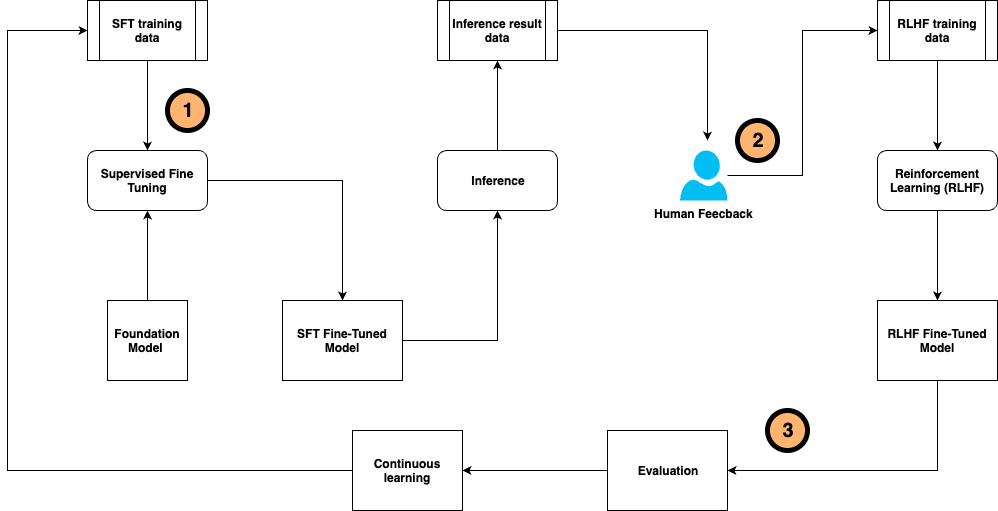
An AI chatbot operates through a continuous sequence of processes during every conversation.
1. Collecting User Input
When a customer submits a question, the chatbot receives the input, which may include text, uploaded documents, or previous conversation history.
2. Natural Language Processing (NLP)
The NLP engine analyzes the language, grammar, context, and meaning behind the customer’s message to accurately understand what they are asking—even when phrased in different ways.
3. Intent Recognition
Based on the NLP analysis, the chatbot identifies the user’s true intent, such as requesting pricing information, checking an order status, or needing assistance from a human agent.
4. Decision Making
Once the user’s intent is identified, the chatbot decides the most appropriate action. It may provide an answer, recommend products, collect contact information, or transfer the conversation to a support representative.
5. Responding to the Customer
The chatbot instantly generates and delivers a response, which may include text, images, buttons, or links to relevant information.
6. Continuous Learning
After each interaction, conversation data can be used to improve the chatbot’s performance, allowing it to better understand customer questions and deliver more accurate responses over time.
The biggest difference between an effective AI chatbot and a poor one lies in its ability to understand business-specific context rather than relying solely on general knowledge.
Benefits and Limitations of AI Chatbots
Benefits
Reduce Labor Costs
By automating repetitive customer inquiries, businesses can significantly reduce the workload of customer service teams, especially during peak hours or outside business hours.
Instant Responses at Scale
AI chatbots can handle hundreds or even thousands of conversations simultaneously without delays.
Improve Customer Experience
Customers receive immediate assistance without waiting, which is a crucial factor in increasing satisfaction and purchase decisions.
Consistent Responses
Because answers are generated from trained business data, AI chatbots provide accurate and consistent information while minimizing human errors.
Limitations
Cannot Fully Replace Human Agents
Complex situations requiring empathy, negotiation, or critical decision-making still need human intervention.
Initial Setup and Training
Building an effective AI chatbot requires proper data preparation and model training. It is not simply a plug-and-play solution.
Limited by Available Data
If the chatbot has not been trained on company-specific information, it may provide inaccurate or incomplete responses.
Data Security Requirements
Since chatbots process customer information, businesses must implement strong security measures to prevent data breaches.
Most of these limitations are not inherent weaknesses of AI technology but rather the result of choosing the wrong platform or insufficient training data. A well-trained AI Agent built on real business data can significantly minimize these issues.

Common Types of AI Chatbots
Rule-Based Chatbots
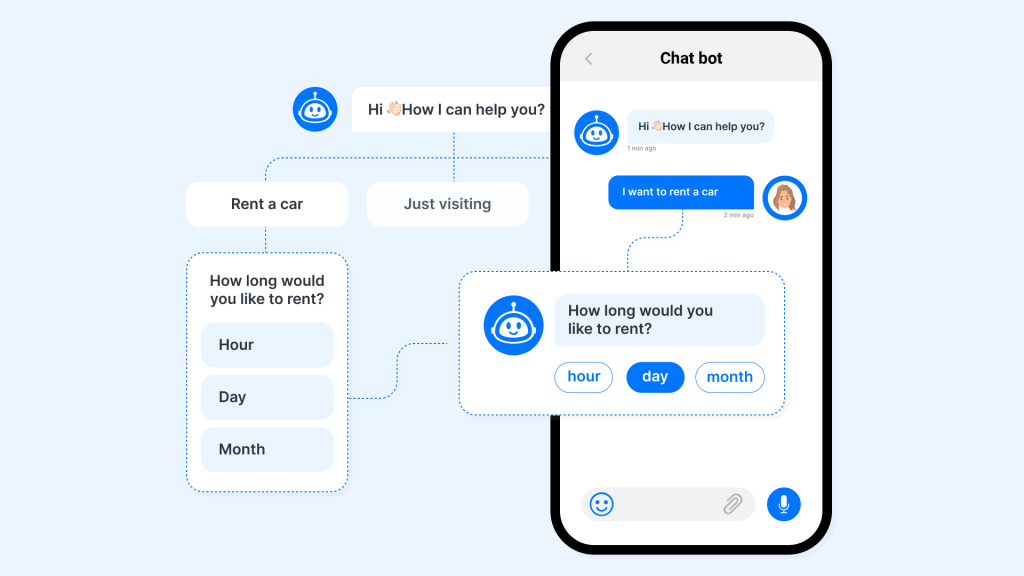
These chatbots guide users through predefined options and conversation flows. They are suitable for simple FAQs but may frustrate users whose requests fall outside predefined scenarios.
Sales Chatbots
Designed to assist throughout the buying journey, sales chatbots recommend products, provide pricing information, explain promotions, and guide customers toward completing a purchase. They can also suggest relevant products based on browsing behavior and conversation history.
Customer Service Chatbots
These chatbots answer frequently asked questions, resolve common issues, and automatically escalate complex cases to human agents when necessary. The more conversations they handle, the better they become at understanding customer needs.
AI Agents
The latest generation of AI chatbots goes beyond answering questions. AI Agents can proactively collect leads, synchronize customer data, notify administrators, and automate business workflows. This is the direction that enterprise AI platforms such as ChatVareno are pursuing.
Practical Applications of AI Chatbots
E-commerce and Retail
AI chatbots help customers search for products, answer pricing and shipping questions, explain return policies, and recommend upsell or cross-sell products based on shopping behavior. This industry currently has one of the highest chatbot adoption rates due to its direct impact on sales.
Customer Service
Across industries such as hospitality, education, healthcare, and professional services, chatbots answer repetitive questions, schedule appointments, send reminders, and allow customer support teams to focus on more complex requests.
Marketing and Lead Generation
AI chatbots engage website visitors from their first interaction, collect lead information, qualify prospects, and help sales teams reach the right customers at the right time.
In Vietnam, AI Agents are rapidly gaining popularity, especially among small and medium-sized businesses seeking cost-effective automation. ChatVareno is one such AI Agent platform designed specifically for this purpose. It trains AI using a company’s own website, documents, FAQs, and business knowledge, then deploys the chatbot across Websites, Zalo OA, Messenger, and Telegram to automate customer support, sales, and lead generation around the clock without requiring a complex technical setup.
Future Trends of AI Chatbots
Voice Integration
AI chatbots will increasingly support voice conversations and integrate with smart speakers, smartphones, and IoT devices.
Deeper Context Understanding
Advancements in deep learning will enable chatbots to understand complex and previously unseen questions instead of relying solely on predefined knowledge.
Greater Personalization
Future AI chatbots will analyze customer behavior to provide highly personalized recommendations and interactions.
Enhanced Security
As AI chatbots process more sensitive customer information, advanced encryption and multi-factor authentication will become essential security standards.
Conclusion
AI chatbots have evolved from an emerging technology into an essential business tool for organizations of all sizes. Their ability to reduce costs, provide instant responses, and deliver consistent customer experiences makes them a valuable asset. However, the true effectiveness of an AI chatbot depends largely on how well it is trained using the company’s own business data.
If you’re looking for an easy-to-deploy AI Agent that understands your products and operates seamlessly across your Website, Zalo OA, and Messenger, try ChatVareno for free or contact the ChatVareno team to discover the best AI solution for your business.
You might also like
- › E-commerce Chatbot Integration: Enhance Customer Experience and Business Performance
- › AI Assistant for Sales & Customer Service: Automate Workflows and Boost Business Performance
- › Customer Service Chatbot: The AI Automation Solution for Modern Businesses
- › How to Deploy an AI Agent to Increase Social Media Conversion Rates by Up to 28%
- › How Does an AI Chatbot Work?
- › Top 5 Benefits of AI Chatbots